In the root cause analysis step, the causes of the problem are identified. Before you can come to really solving your problem, you will need to find out the root causes. This is important because we don't want to take actions on the symptoms we observe, but on the causes of a problem to be able to structurally solve the issue. If you have a root cause, you can usually find the countermeasure very easily.
Finding the root cause is a process that requires time and dedication. Most often you will need to have a conversation with the crew to understand the problem and find out what the root causes are.
Tools and tips
A very powerful tool to finding root causes is the 5xWhy. By asking 'Why?' five times you will deep dive into the causes of the problem.
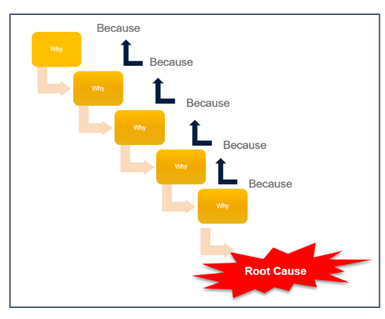
It is important to test the cause by answering the why question with "because ...... ". For example; Why is there corrosion in the system? > Because there is oxygen in the water. > Why is there oxygen in the water? >Because ... etc.
The root cause is found when you can define an action that will remove the problem forever. Asking why 5 times is a rule of thumb, sometimes you arrive at the root cause earlier and sometimes you may need to ask why more times to get to the root cause.
An Issue Tree can be used to identify the root causes especially when a problem has more than one root cause. The principle of the issue tree is the same as the 5xWhy; you will also ask why? Five times, but you recognize that you have multiple causes and create a tree accordingly.
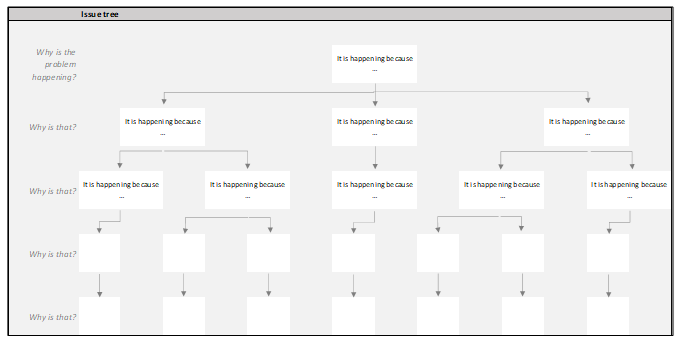
After creating the Issue Tree you select the most important root causes. Ask yourself the questions which causes need to be addressed to solve the problem? Tip; focus as much as possible on the root causes that are in your control, to be able to solve the problem quickly.